

NeuralWing
Real-time neural simulation and design optimization of transonic aircraft aerodynamics


Transonic 3d Wing
Geometry and inflow Variations
Real-time Inference
Design-parameter Optimization

NeuralWing Demo
Modify wing geometry and test optimizations to maximize aerodynamic efficiency
The largest 3D transonic wing dataset with real-time neural simulation
We created a dataset of 30,000 steady-state CFD simulations of a 3D wing in the transonic regime, varying four geometry parameters and two inflow conditions. Utilizing our AB-UPT surrogate model trained on this data, the demo shows how design parameters can be optimized in seconds to maximize KPIs such as the lift-to-drag ratio.
large-scale 3D transonic CFD dataset
accurate neural simulation
Real-time Simulation & optimization
Dataset size
30,000 simulations
Dataset variability
4 geometry parameters, speed, angle of attack
Simulation accuracy
AB-UPT achieves 99.5% accuracy on pressure fields
Simulation & Optimization speed
Real-time prediction & design parameter optimization
1000x
Simulation speedup
99.8%
Drag & Lift Data Agreement
30 seconds
Design Parameter optimization
Architecture & Performance
Model Architecture
Type
AB-UPT
Input
Geometry mesh (STL), speed, angle of attack
Output
fields: pressure, friction, velocity
integral forces: lift, drag
integral forces: lift, drag
Training Data
26,000 CFD simulations
Geometry generation for inference
Geometry mesh (STL) is created in real-time from 4 design parameters in a differentiable manner
Performance Metrics
Numerical CFD Simulation (RANS)
4 CPU hours
(not optimized)
(not optimized)
AB-UPT
100 ms for surface fields,
1 sec for volume fields
1 sec for volume fields
Design-parameter Optimization
50 ms per gradient-free step,
150 ms per gradient step
150 ms per gradient step
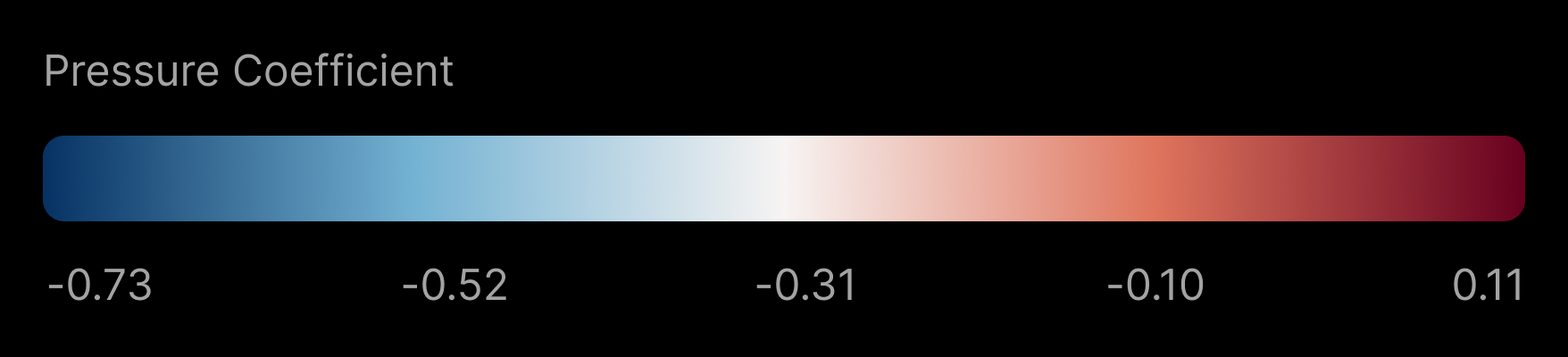
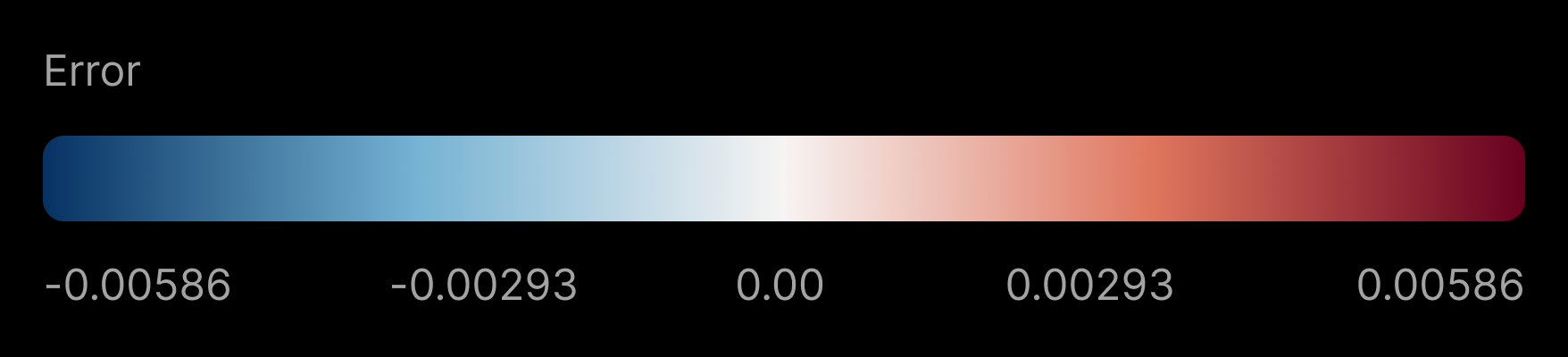
Pressure coefficient comparison
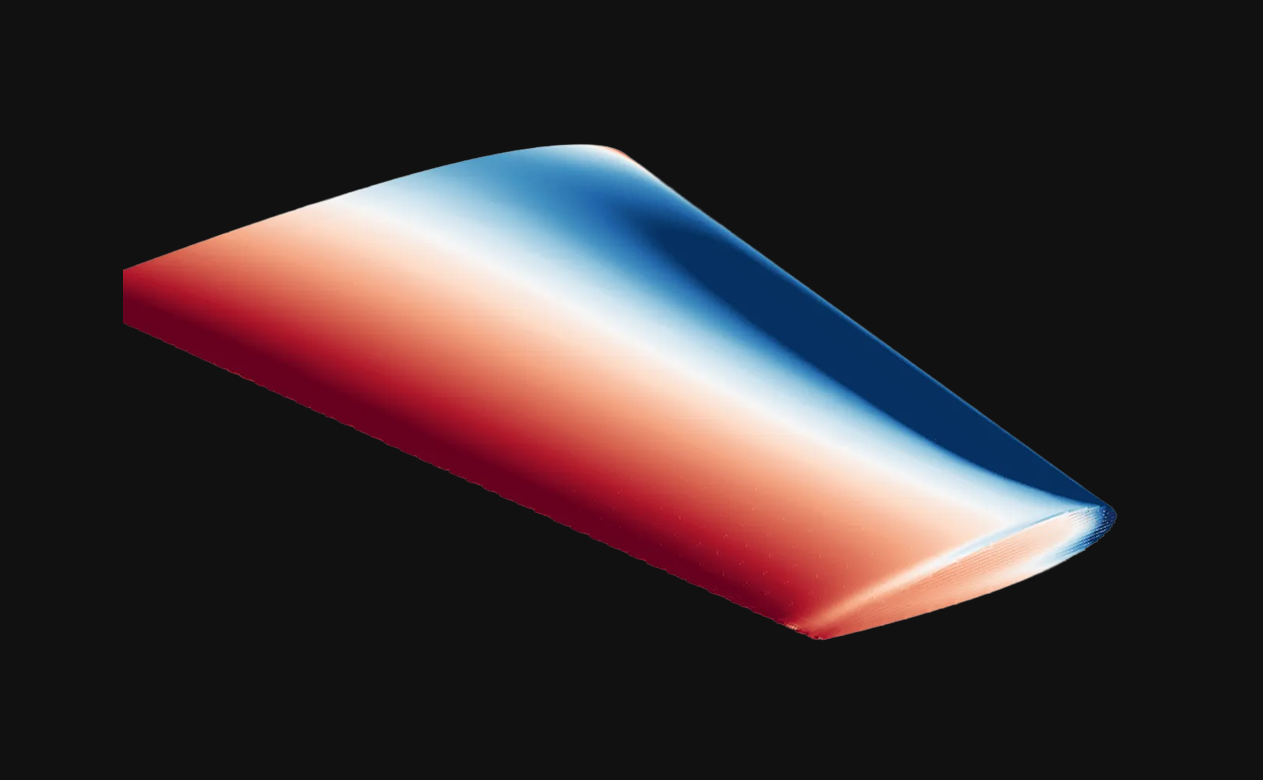
GFD Ground Truth
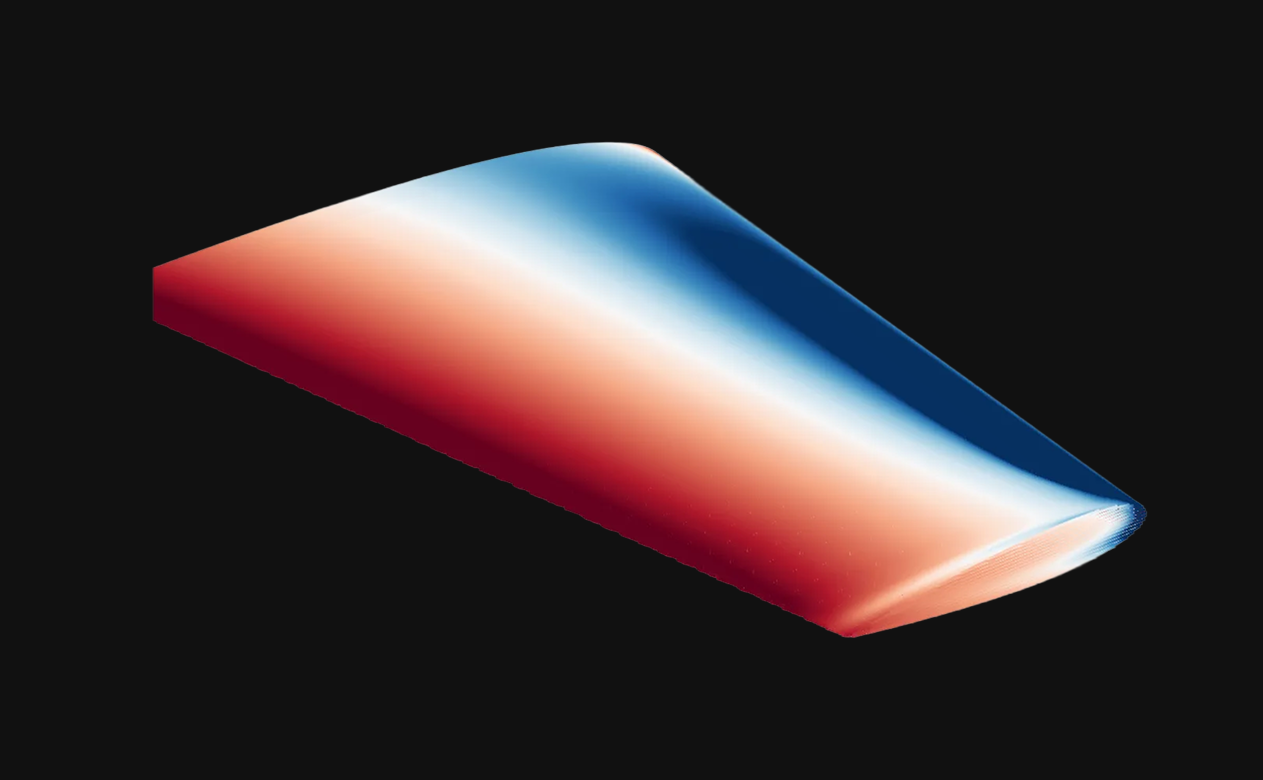
AB-UPT
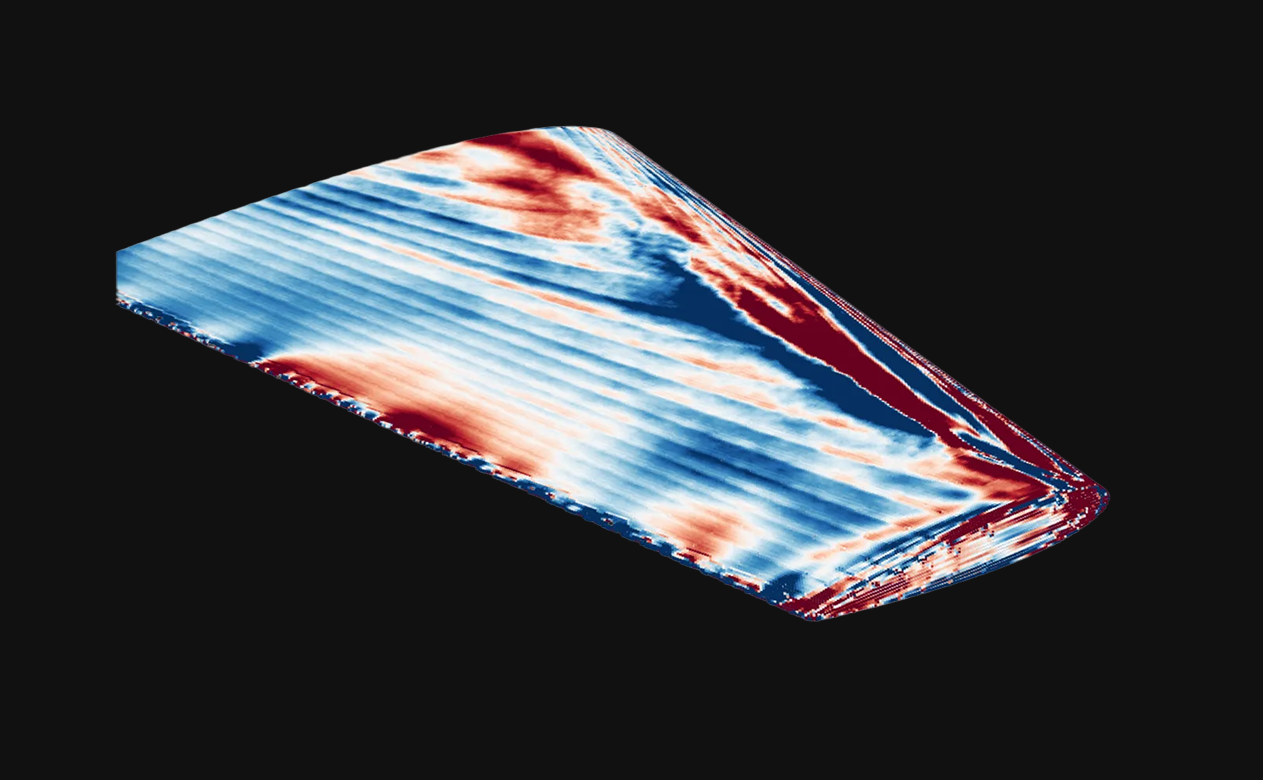
Prediction Error
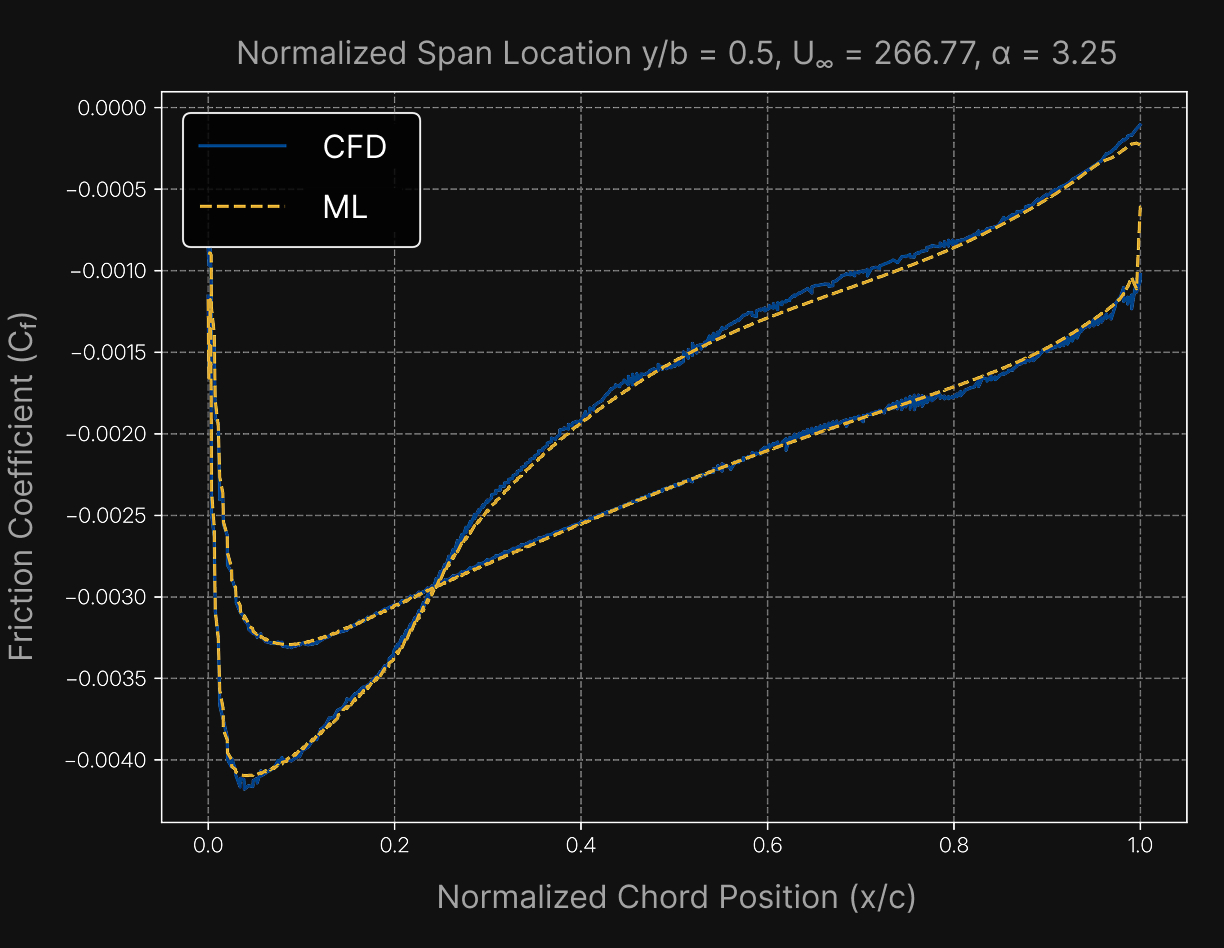
Friction profile
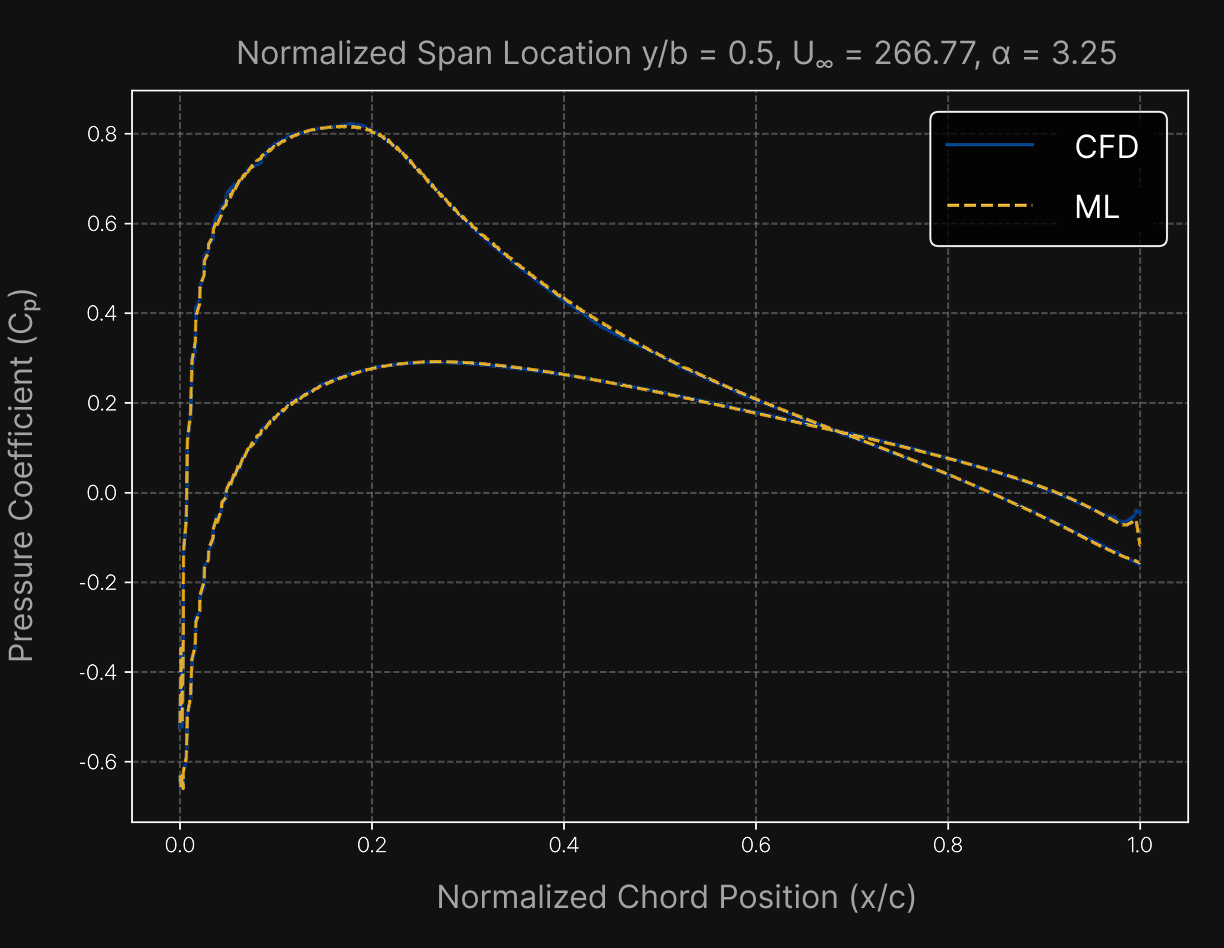
Pressure profile
The NeuralWing AI model enables real-time simulation and design optimization
Ready to accelerate your development?
Explore how AI powered models are transforming physics simulations, from thermodynamics to fluid dynamics, and learn how to get started building or integrating your own models.
.svg)
© 2025 Emmi AI GmbH

